
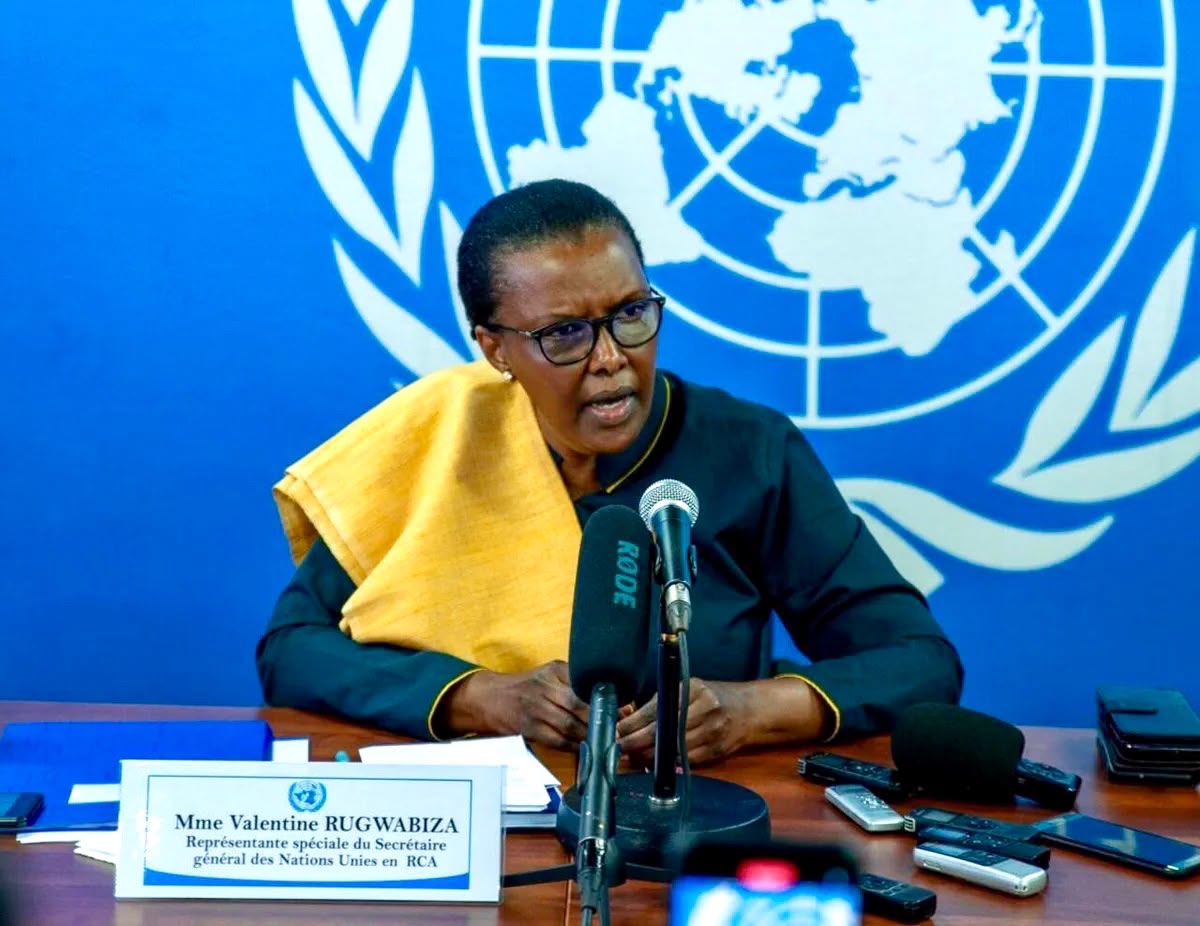
UN Secretary-General António Guterres announced on 18 November 2026 that Mali’s Mohamed Ag Ayoya will replace Valentine Sendanyoye Rugwabiza as head of the MINUSCA peacekeeping mission in the Central African Republic. Her mandate ends in December after she took the post in February 2022. The decision landed only days after the Francophonie summit in Phnom Penh denied Louise Mushikiwabo a full third term and gave her a one-year extension instead.
Rugwabiza has been a long-time Kagame loyalist. She served as Rwanda’s ambassador to the UN, minister for East African Community affairs and head of the Rwanda Development Board before moving to Bangui. Jeune Afrique covered her appointment and noted how Rwanda had become the largest troop contributor to MINUSCA while also running its own bilateral military and business deals with the Central African government. Kagame himself had earlier criticised the UN force as too passive. Placing his own diplomat at the top of the mission looked like a way to keep influence inside the operation.
Official UN language thanks her for progress on elections, disarmament and security. The timing tells a different story. The same week that Kigali failed to lock in Mushikiwabo against opposition from Kinshasa and pressure from Paris, it also lost the top UN post in Bangui. RFOS read both setbacks as signs that Kagame’s habit of parking trusted envoys in international jobs to shield the government and push its agenda is running into harder resistance.
Possible reasons for the end of Rugwabiza’s term go beyond normal rotation. Some point to unease among Security Council members about Rwanda’s dual role, leading a UN mission while operating its own security and economic interests on the ground. Others see the decision as part of the wider cooling that followed the Francophonie clash.
When France asked Kagame to withdraw Mushikiwabo and the DRC threatened to leave the organisation, Kigali held firm yet still came away with only a short extension and a promise not to run anyone next time. That sequence showed how limited Kigali’s leverage has become once partners start counting the cost of closer alignment.
Inside Rwanda the political climate remains tightly managed
Independent media is scarce, opposition voices face restrictions, and public discussion of government setbacks stays muted. The successive diplomatic knocks may not spark open debate at home, yet they strip away one of the tools the system has used to project strength abroad.
Neighbours and partners who once treated Rwandan candidates as near automatic successes now calculate more carefully. For a government that has long treated international postings as both shield and instrument, the practical result is thinner cover and less room to set the terms.
Our Voice . Our Freedom