
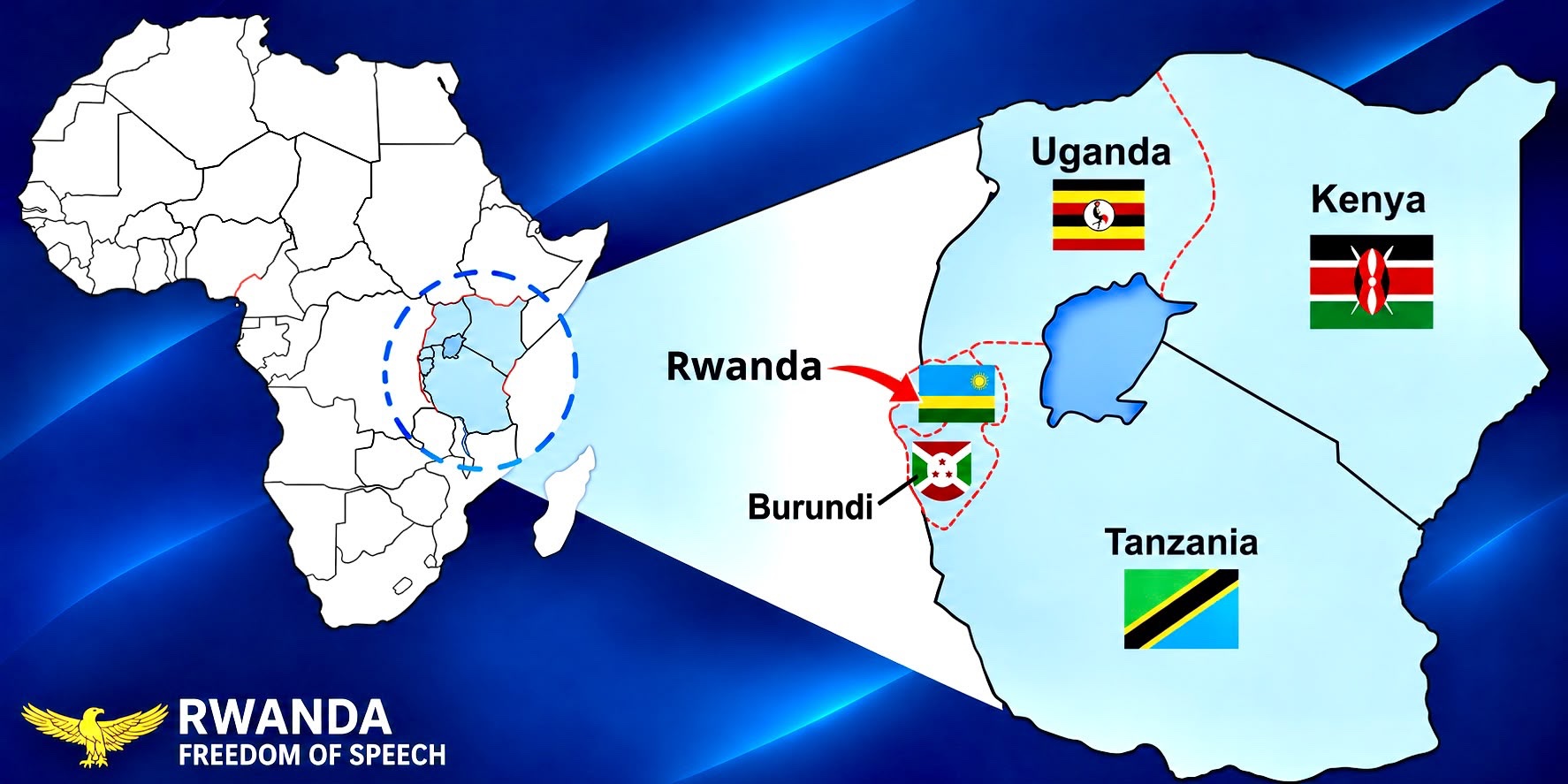
People keep asking the same thing when trouble flares in the Great Lakes: why is it always Rwanda? Why not Burundi, or Uganda, or Tanzania, or the Congo itself? Is the problem the country, or is it the man who has run it for more than thirty years?
Plenty of Rwandans want open borders, normal trade and quiet neighbours. Plenty of them are tired of being told that any criticism of policy is an attack on the country itself. Treating a whole nation as if it shares one man’s decisions is both inaccurate and unfair. Let'us analyse the situation together;
Burundi
Burundi is the closest neighbour in language, culture and history. For decades the two countries traded refugees the way other places trade goods. Tutsi fled Rwanda in the late 1950s and found shelter in Burundi. Hutu fled Burundi in 1972 and found shelter in Rwanda. Each side later suspected the other of arming the people who had crossed.
After 2005 the two governments got along well enough for a while. Then came 2015. Pierre Nkurunziza decided he wanted a third term. Protests turned into a failed coup. Bujumbura pointed at Kigali and said the plotters had help from across the border. Kigali pointed back and said Burundi was sheltering people linked to the FDLR. The border shut. Trade dried up. Families who had always crossed for markets, weddings and funerals suddenly needed passports and long detours. Ordinary people on both sides paid the price in higher prices, lost jobs and broken ties.
The border reopened years later under a new Burundian president Evariste Ndayishimiye, then closed again in early 2024 after attacks by the RED-Tabara group. Bujumbura said Rwanda was backing the attackers. Kigali denied it. As of late 2026 the land crossings are still shut, even though some goods find other ways through. Catholic bishops from both countries have publicly asked the governments to keep talking and reopen the roads. That request is simple and overdue: sit down in the open and talk. The people living on either side of the line have already waited long enough.
Uganda
Move north to Uganda. Paul Kagame once fought in Yoweri Museveni’s war. The two men were close. Later they became rivals. The open break came with the Kisangani fighting, when the two armies clashed directly in the city from 5 to 10 June 2000 during the Second Congo War.
In 2019 Rwanda closed the busy Gatuna/Katuna crossing. Kigali said Ugandans were arresting Rwandans and supporting rebels against Kagame's regime. Kampala said Rwanda was running spies and imposing a trade ban. Traders lost income for years.
In Luanda the two presidents signed a paper promising to respect each other’s borders and stop supporting each other’s enemies. The border eventually reopened. New police and health agreements keep appearing. Uganda Airline is currently flying in the Rwanda' airspece freely. Which is so good. Yet ordinary people still wonder what exactly was agreed behind closed doors and whether those promises still hold.
However, they should put the papers in the public domain where everyone can read them. Secret deals between leaders rarely stay secret, and when they fail the traders and families are the ones who suffer.
Tanzania
Tanzania is farther, but the scar is still there. In 2013 President Jakaya Kikwete suggested that Rwanda should talk to the FDLR. Kagame answered in public, in front of young people, that he would wait for Kikwete at the right place and hit him. Shortly afterwards Tanzania ordered the expulsion of illegal immigrants mostly from Rwanda.
Thousands of people who had lived in Tanzania for decades, many of them born there, some elderly, some children, were rounded up and pushed across the border into Rwanda. Homes, farms and businesses were left behind. Rwanda set up camps.
The human cost was immediate and visible. Relations later improved under president John Pombe Magufuri in both capitals, and Tanzania remains an important route for Rwandan trade. The 2013 episode still shows how quickly a personal quarrel between presidents can turn into forced movement of ordinary citizens.
The Democratic Republic of Congo (DRC)
The longest and bloodiest story is with the Democratic Republic of Congo. After the 1994 genocide, hundreds of thousands of Rwandans, including members of the defeated army and Interahamwe, crossed into what was then Zaire. Some of them formed the FDLR. Rwanda has repeatedly entered Congolese territory or backed Congolese groups that claim to defend Tutsi communities there. The First and Second Congo Wars followed. Later came the CNDP, then the M23 in 2012, then the M23 again from 2021 onward.
United Nations experts and several Western governments have published detailed reports saying Rwandan troops and equipment are fighting alongside the M23. Kigali says it is only defending itself against the FDLR and against discrimination of Kinyarwanda speakers. Fighting continues in 2026 even after high profile peace ceremonies in Washington. Towns are being destloyed, people flee, minerals keep moving. Each side accuses the other of lying.
The civilians in North and South Kivu pay every time the armies move. In every one of these cases the official statements rarely match what people on the ground experience. Borders close for security, yet the same security services later admit the real fight was political. Rebel groups are Congolese only, until satellite images and captured equipment show otherwise with a presidential insult. Agreements are signed in capital cities, then quietly ignored. The gap between the press release and the empty market stall is wide.
Most of the people who hold international positions, who sign human rights reports, or who run regional organisations know the pattern.
We are all temporary on this earth. No leader, no army, no border post lasts forever. The people who close roads, arm proxies and threaten each other will one day leave. The hills, the markets and the families will still be there. It is better to leave the place quieter than you found it. Let people live in peace.
Open the dialogue. Publish what was agreed. Let people cross again. The lternatives should no be more closed borders, more camps and more years in which the same question keeps being asked: why always Rwanda?
Isn't it time to re-examine ourselves and focus on what matters?
Our Voice . Our Freedom