
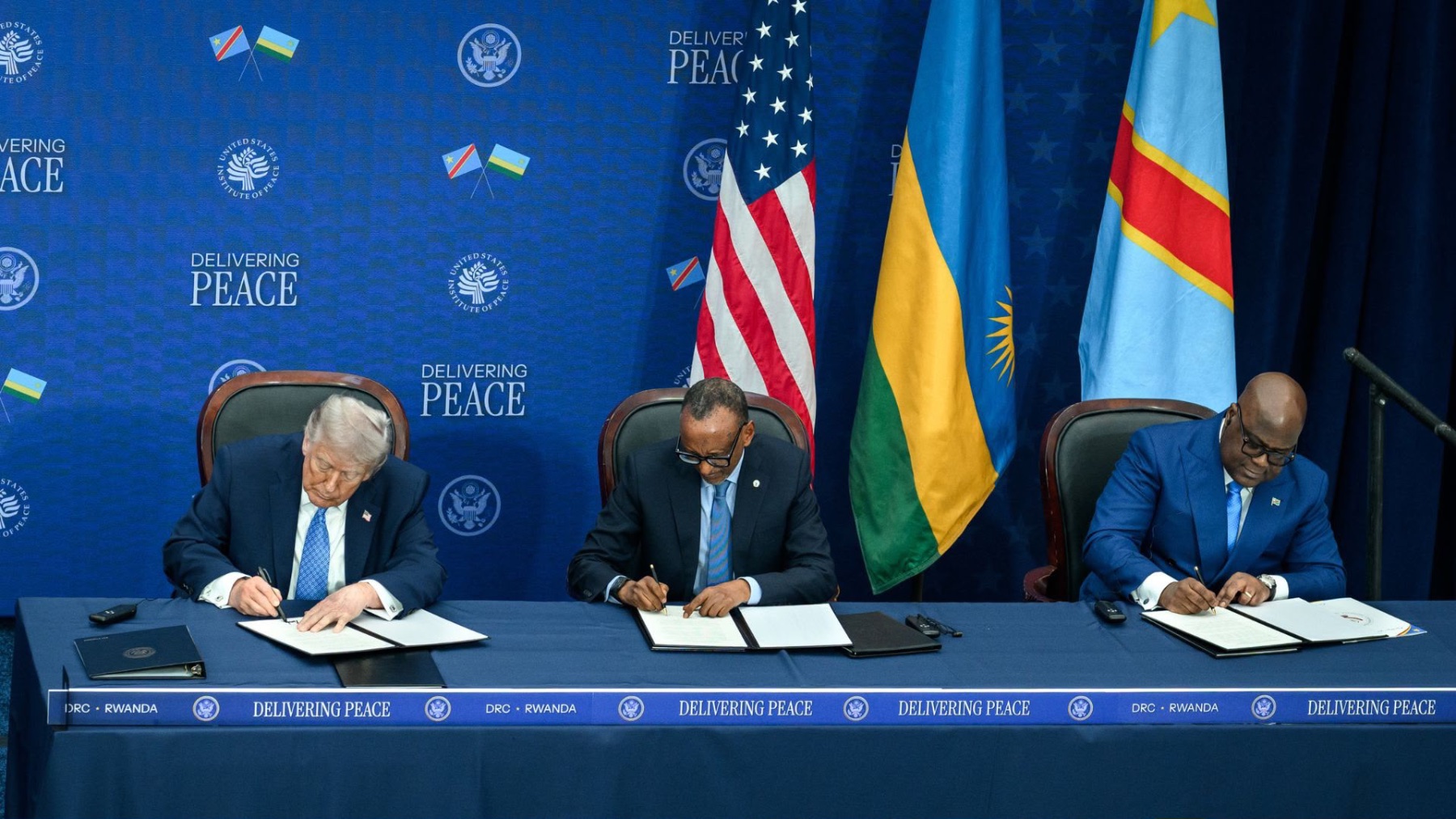
In December 2025 President Donald Trump stood with President Paul Kagame and President Félix Tshisekedi while they signed the Washington Accords for Peace and Prosperity. The deal was meant to end fighting in eastern Congo, open trade, and give American companies clearer access to minerals. Months later the same agreement is under strain.
Fighting did not stop after the signing. M23 kept control of large areas in North and South Kivu. Independent monitors said Rwandan forces remained inside Congolese territory. In March 2026 the United States sanctioned the Rwandan army. In October it sanctioned the Ministry of Defence and Zigama. U.S. officials said Rwanda had not met its promise to pull back and stop supporting the rebels. Rwanda says Congo has not dealt with the FDLR militia and that its own steps are only defensive.
The economic part of the deal was supposed to reward both sides once security improved. That part has moved slowly. American companies want stable supply lines for cobalt, coltan, and gold. They also want to know that fighting will not suddenly cut those lines again. So far the security steps that would make the economic steps possible have not been completed. Both sides accuse the other of blocking progress. The United States has used sanctions mainly against Rwanda while continuing talks with both governments.
People who follow the region closely say the core problem is that each side waits for the other to move first. Congo wants Rwandan troops out before it acts strongly against the FDLR. Rwanda wants action against the FDLR before it withdraws. In the meantime M23 holds ground and minerals keep moving. The longer this continues, the harder it becomes for the signed papers to matter on the ground.
More than 12,000 former FDLR members have already returned to Rwanda, including early senior leaders such as General Paul Rwarakabije, the group’s former military commander and Jerome Ngendahimana, its former intelligence chief, both of whom left in 2003 and later rose to major general in the Rwandan Defence Forces (RDF). Other officers like Anastase Munyaneza, Idrissa Bizimana and Ezechiel Gakwerere have followed in recent years. The old strongholds they once held in places like Masisi, Rutshuru and parts of Walikale are now under M23 control.
The signing photo from December showed three leaders promising a new start. What has followed shows how difficult that promise remains. Rwandans and Congolese living with the results of the fighting will judge the accords by whether the guns quiet and daily life becomes safer, not by the pictures taken in Washington.
Our Voice. Our Freedom