

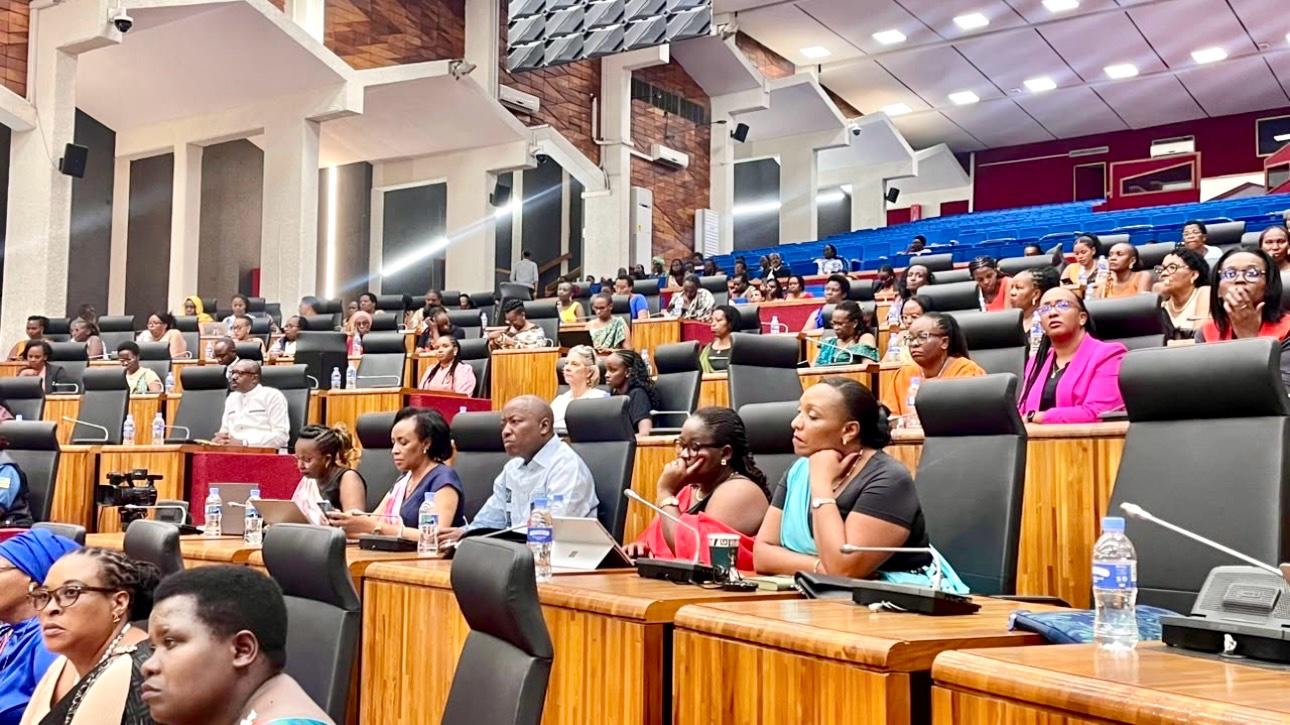
Paul Kagame did not empower Rwandan women. He installed them. More than sixty percent of the seats in parliament now belong to women, a number the government never stops repeating for foreign cameras. What the numbers never show is the selection process: only those who have already proven total loyalty get the nomination. Once inside, their first and last duty is the same; applaud the president, defend every decision, and never ask a question that might embarrass the real power.
These women are not there to govern. They are there to be seen. Their speeches follow the same script. Their votes arrive in perfect blocks. When a minister needs cover, a female MP stands up and praises the vision. When the president speaks, the chamber rises. That is the job. The rest is performance. In return they receive salaries and allowances far above what most Rwandans will ever touch, official cars, housing benefits, and the quiet privilege of never being held to the same standard as ordinary citizens.
Every year the Auditor General tables the same kind of report.
Money meant for seeds and fertilizer disappears. Irrigation projects stay unfinished. Storage facilities that were supposed to stop post harvest losses exist only on paper. Districts that should have surplus grain report shortages instead. The numbers are public.
The hunger that follows is also public. Yet the women who hold the constitutional power to summon ministers, to reject budgets, and to demand prosecutions have never used that power in any way that threatens the system. No minister has lost a job because of those reports. No major official has faced real consequences. The reports arrive, the chamber nods, and the next budget is approved.
Farmers who cannot buy fertilizer or who watch their crops fail do not get the same protection. They get speeches about resilience. Meanwhile the people whose only visible task is to keep Kagame’s image clean continue to collect their pay. The gap is not accidental. It is the design. A parliament that cannot or will not hold the executive to account is not a check on power. It is decoration.
Outside the country the same method continues
Critics of the government, whether journalists, opposition figures, or ordinary citizens who speak too freely, meet the same responses: arrest, exile, or silence. International pressure over human rights and regional conflicts is answered with more polished public relations.
When sanctions or restrictions appear, the cost falls on fuel, food, and the small trader, not on the people who make the decisions. At the same time, public money is spent on campaigns that hire voices abroad to repeat the official story. Taxpayers fund the advertisements that tell the world Rwanda is free and progressive while the same taxpayers are told at home to stay quiet.
The high number of women in parliament is presented as proof of progress. It is presented that way because it works. Foreign governments and organizations see the percentage and ease their questions. The women themselves rarely contradict the story, because contradiction ends careers. What remains is a carefully managed image paid for by people who still struggle to feed their families when the rains fail or when prices rise.
The image is expensive. The silence is more expensive. The claim that this arrangement equals freedom is the most expensive claim of all, because it is repeated until enough outsiders believe it.
Our Voice. Our Freedom.