

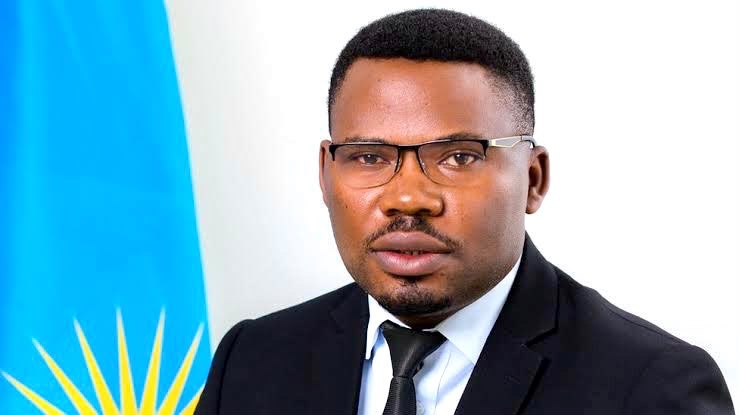
President Paul Kagame has placed Edouard Bamporiki back among the country’s senior leadership circles by appointing him Executive Secretary of Unity Club Intwararumuri. The decision, announced on 27 October 2026 in a statement from the Prime Minister’s office issued in the President’s name, returns a man convicted of corruption to a role that places him at the centre of the elite network that shapes political cohesion in Rwanda.
Bamporiki previously served as State Minister for Culture, as a Member of Parliament, and as head of the National Itorero Commission. In May 2022 he was suspended while investigators examined allegations that he had solicited and accepted bribes from businessman Norbert Gatera. The money was linked to efforts to reopen a closed alcohol factory and to secure the release of Gatera’s wife. Courts established that he received the payments. The Nyarugenge Intermediate Court sentenced him to four years in prison and a heavy fine. On appeal the High Court raised the sentence to five years. He later received a presidential pardon in October 2024.
A pardon is an exercise of clemency. It ends or shortens a sentence but does not cancel the conviction, clear the record, or rewrite the facts established by the courts. No law in Rwanda automatically erases a criminal finding simply because mercy has been granted. The judgment stands.
Rwanda Freedom of Speech has repeatedly stated that positions carrying influence among leaders should be given to people whose records show clean service, not to those already proven to have traded public authority for private payment.
Unity Club is formally a private organisation founded in 1996 by First Lady Jeannette Kagame. It gathers current and former senior officials and their spouses with the declared aim of promoting unity and dialogue. Yet the appointment of its Executive Secretary was made public through official government channels and described as having been done in consultation with the organisation. This practice keeps the line between private association and state direction deliberately thin. Similar platforms, including the political parties’ consultation forum, have long served to keep senior figures aligned and to discourage any of them from shifting toward open opposition.
Qualified, unemployed Rwandans who have never been convicted of corruption exist in large numbers. Choosing a convicted bribe-taker for a role at the heart of the political class tells ordinary citizens that loyalty and usefulness to the current structure matter more than proven integrity.
Rwanda Freedom of Speech sees the move as reinforcing the networks that can be used to shape public narratives at a time when more people are prepared to speak about the need for genuine reform. Restoring someone with Bamporiki’s record to such a position undermines any claim that the fight against corruption is applied without favour.
Our Voice. Our Freedom