

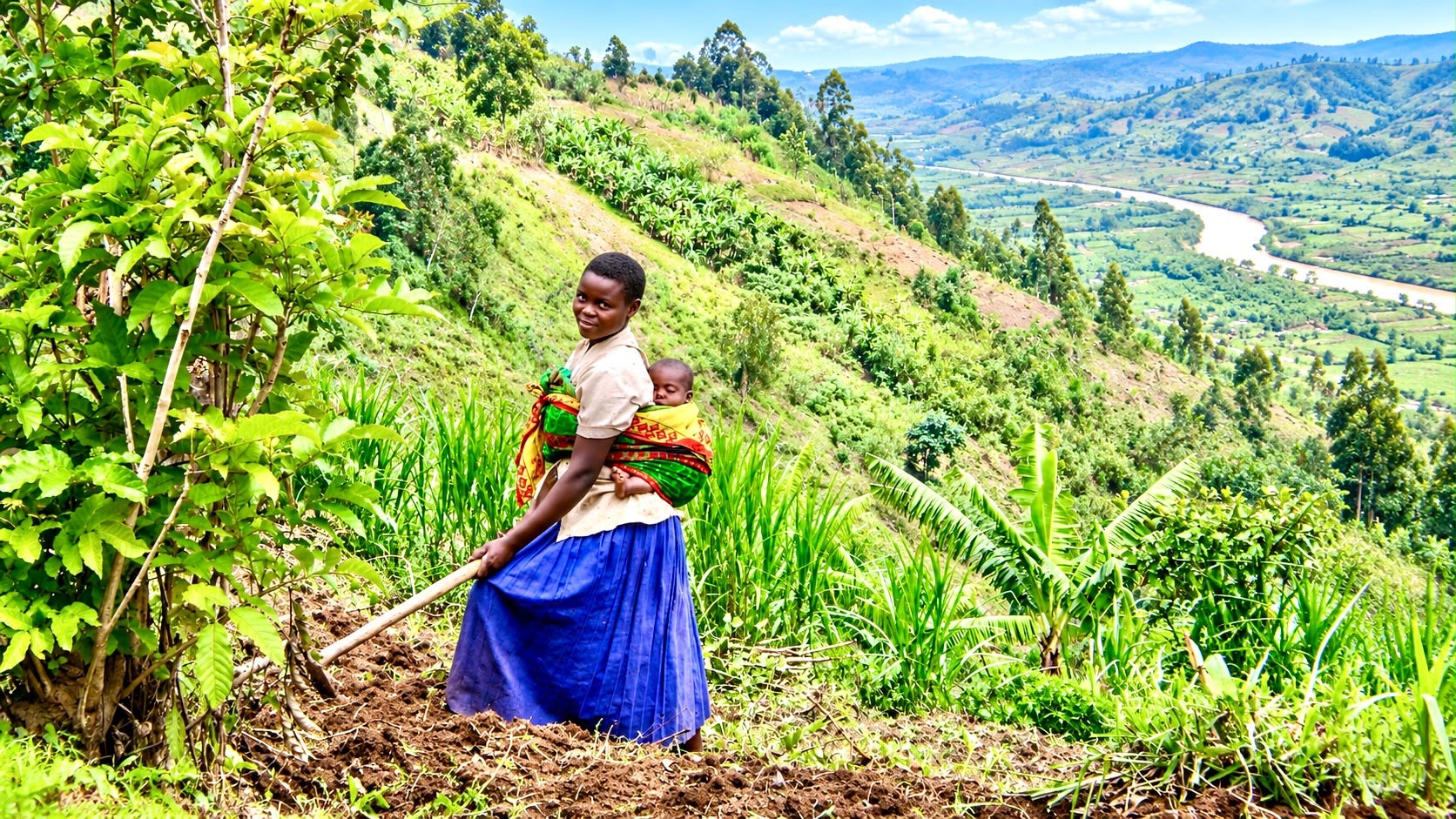
People in the west and south of Rwanda used to cross into Congo and Burundi every day to sell beans, potatoes, tomatoes, and small livestock. That trade kept families alive. Those crossings are largely gone now. On the southern border with Burundi, the land crossing has been shut to ordinary people since early 2024. Small traders who once walked across with goods on their heads or on bicycles can no longer do it.
Formal shipments still move through other routes, but the everyday business that fed thousands of households has dried up. On the western border with Congo, fighting around Goma, temporary closures, health restrictions, and new rules have repeatedly stopped or slowed the small traders who depend on that market. What used to be a daily walk across the border has become impossible or too dangerous for many.
The same people who lost that trade are also being stopped from farming the way they used to. Under policies pushed for years under President Kagame’s government, small farmers have been pressured to consolidate their plots and plant only the crops the state prefers mainly maize, potatoes and a few others. Local officials and agronomists tell people what to plant, when to plant it and how to farm.
Traditional mixed crops that families grew for food, sweet potatoes, sorghum, beans, vegetables, are discouraged or banned in many places. If a farmer refuses, the land can be taken or access denied because the state claims ultimate control. Researchers who studied these programs found that some of the poorest households ended up with less food, not more, because they lost the diversity that protected them when one crop failed. Officials talk about higher yields and modernization. On the ground, many families still go to bed hungry.
Hunger is not a secret in the numbers
Rwanda’s 2026 Global Hunger Index score sits at 21, ranked serious. Roughly 30 percent of the population remains undernourished. Child stunting is still around 30 percent. Officials celebrate that most households can now feed themselves somehow and point to falling poverty figures. Those figures hide the reality for the rural poor who lost their border trade and were forced into single-crop farming that does not match their small plots or their need for variety. When the rains fail or prices drop, there is nothing left.
Almost no one talks about this openly inside the country
People smile for visitors and say things are fine because speaking the truth can bring trouble. Journalists and ordinary citizens who criticize land policies, border restrictions, or hunger have been arrested, charged under vague laws about divisionism or false information, or simply disappeared from public view. Opposition figures stay in prison. Self-censorship is the normal way of life. Families hide their empty plates and their empty markets because they know the government does not tolerate public complaints. The silence is not agreement. It is fear.
What can people do?
Aid and investment should come with real pressure to reopen border trade for ordinary people, to stop forced monocropping, and to release those jailed for speaking about hunger. Inside the country, quiet networks of neighbors who share food and information still exist. Strengthen them carefully.
The land is still there. The borders are still there. The people who know how to farm and trade are still there. What is missing is the freedom to use them without fear. Until that changes, the hunger will continue and the silence will keep covering it.
Our Voice. Our Freedom