
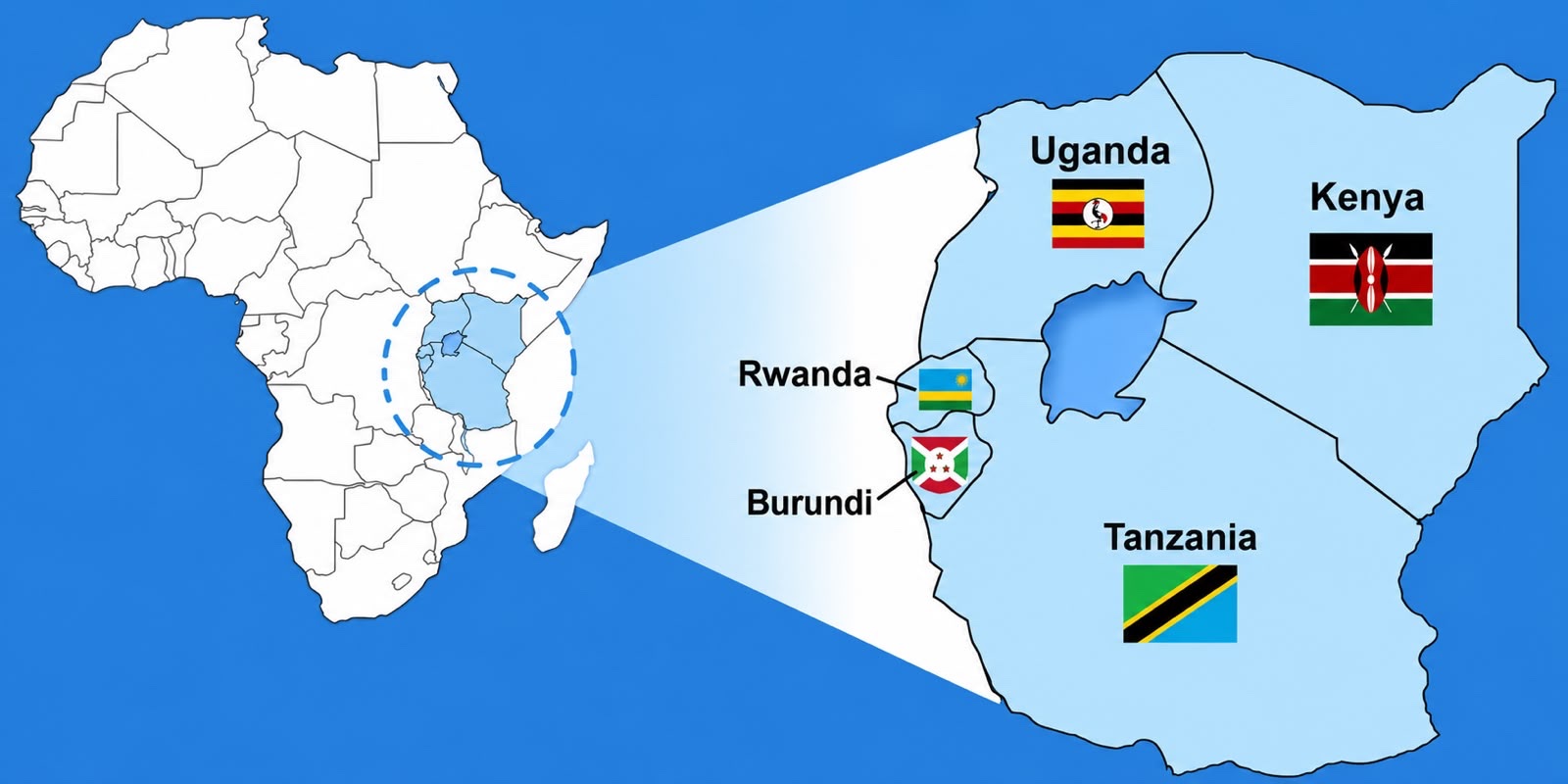
On paper, Rwanda, Burundi, Tanzania, Kenya and Uganda all claim a right to speak. In practice the right is rationed, and the ration decides what the rest of the world is allowed to see.
Reporters Without Borders’ 2026 index puts Kenya at 106 out of 180, Tanzania at 117, Burundi at 119, Uganda at 131 and Rwanda at 139. Rwanda sits in the very serious band. None of the five is free. The gap between them is not a gap between open societies. It is a gap between how tightly the lid is screwed down.
Rwanda runs the tightest system
Criticism of the government, of the army, police or of the official story of the genocide can be treated as a security offence. Journalists work under a thick layer of self censorship. Two media workers were still in detention this year, among them Théoneste Nsengimana, held on a charge of inciting unrest. Many others left the country years ago. Kigali looks orderly from outside. That order is partly real and partly the result of being silenced.
Burundi’s press has shown resilience since the 2015 crisis, and there are signs of progress to build on.
In 2024, the government took a meaningful step by converting some prison sentences into fines for press offences, including insult and outrage against good morals. This marks a move away from incarceration as the default punishment.
While civic groups still rate the country’s space as closed, the door for change is clearly open the legal reforms already begun, combined with continued international attention and local advocacy, point toward a path where Burundi’s independent media can reclaim its strength.
Tanzania is the sharpest fall in the group
It dropped 22 places on the 2026 index after years in which it had looked like the least bad of the neighbours. In 2025 the communications regulator banned the online forum JamiiForums for 90 days over content the state called misleading. Police were told to patrol the internet.
During the October general election the authorities cut the internet, barred local and foreign reporters from covering the human rights situation, and met protests with lethal force. Hundreds were killed or badly hurt. Thousands were arrested under terrorism and treason laws. When the network goes dark, killings become rumours. Rumours are easier to deny than footage.
Kenya still has the loudest argument in the region, which is why the crackdowns there get seen. Reporters who follow corruption or street protests are threatened, beaten and priced out: foreign accreditation costs have climbed into the thousands of euros a year. The 2024 tax protests and the 2025 commemorations of those dead left dozens killed and hundreds injured, according to the national human rights commission and rights groups.
Parts of the cybercrime law that criminalise false or offensive posts were later suspended by the High Court. That court fight is the point. Kenya still has institutions that can push back in public. The other four mostly do not.
Uganda treats coverage of the opposition as a policing problem. At the Kawempe North by election in March 2025, soldiers and police beat journalists who were wearing press vests, seized equipment and arrested reporters. NTV and the Daily Monitor were then barred from parliament and from covering the presidency.
The pattern is the same even when the method changes. Vague charges, false information, insulting the head of state, undermining security do the work that an open ban would do more clumsily. State broadcasters carry the official line. Private outlets learn the red lines or lose their signal. Internet cuts arrive on election week.
That is why freedom of speech is not a luxury right sitting beside the others. It is the right that makes the others visible.
A locked cell is a private fact until someone can name the prisoner.
Where freedom of speech is thin, the other rights do not disappear from the statute book. They disappear from view. Donors see growth figures. Neighbours see stability. Citizens see a silence they are not allowed to describe. The benefit of letting people speak is not politeness. It is evidence. Rights that cannot be named in public cannot be defended in public, and a right that cannot be defended is already gone.
Our Voice. Our Freedom