

People in the poorer districts are still going short of food. Official numbers say the country as a whole is better off than it was a few years ago. Both things can be true, and the second one is what gets sold abroad.
The 2024 national food survey put about 83 percent of households in the food secure group, up from 79 percent in 2021. Households in severe food shortage fell to about 1 percent. The Western Province still had roughly 23 percent of homes short of food, the Southern Province about 16 percent. Kigali was near 4 percent. Child stunting dropped from 37 percent in 2015 to 30 percent in 2024. Thirty percent is not a solved problem. It means a large share of children are still not growing as they should.
Gisagara is one of the hardest places
The 2023/24 household survey put poverty there at 45.6 percent, second only to Nyamagabe at 51.4 percent. Local projects in Gisagara are still handing out chickens, mushrooms, kitchen gardens and avocado trees because children are still arriving underweight. Musanze has been running the same kind of garden campaign against stunting. Those programmes exist because the hunger has not gone away once you leave the capital.
Prices have made it worse
The national consumer price index was up 13.6 percent in June 2026 compared with a year earlier. Later readings in 2026 put inflation around 15.7 to 15.9 percent, with food up roughly 16 percent, and rural baskets often tighter than city ones. People in market reports describe potatoes jumping in a single month. Officials usually call this a gap between harvests. For a family already on the edge, that gap is an empty pot.
People who have spoken to Rwanda Freedom of Speech put it more plainly than the surveys do. They say what they need is direct help, first of all food for the children and clothes on their backs. Not another workshop, not another post about how clean Kigali looks. A meal and something to wear. That is their account. It has not been checked household by household, and in the current climate it is hard to check. It matches what the district poverty and stunting figures already show.
This sits on the desk of the Minister of Local Government
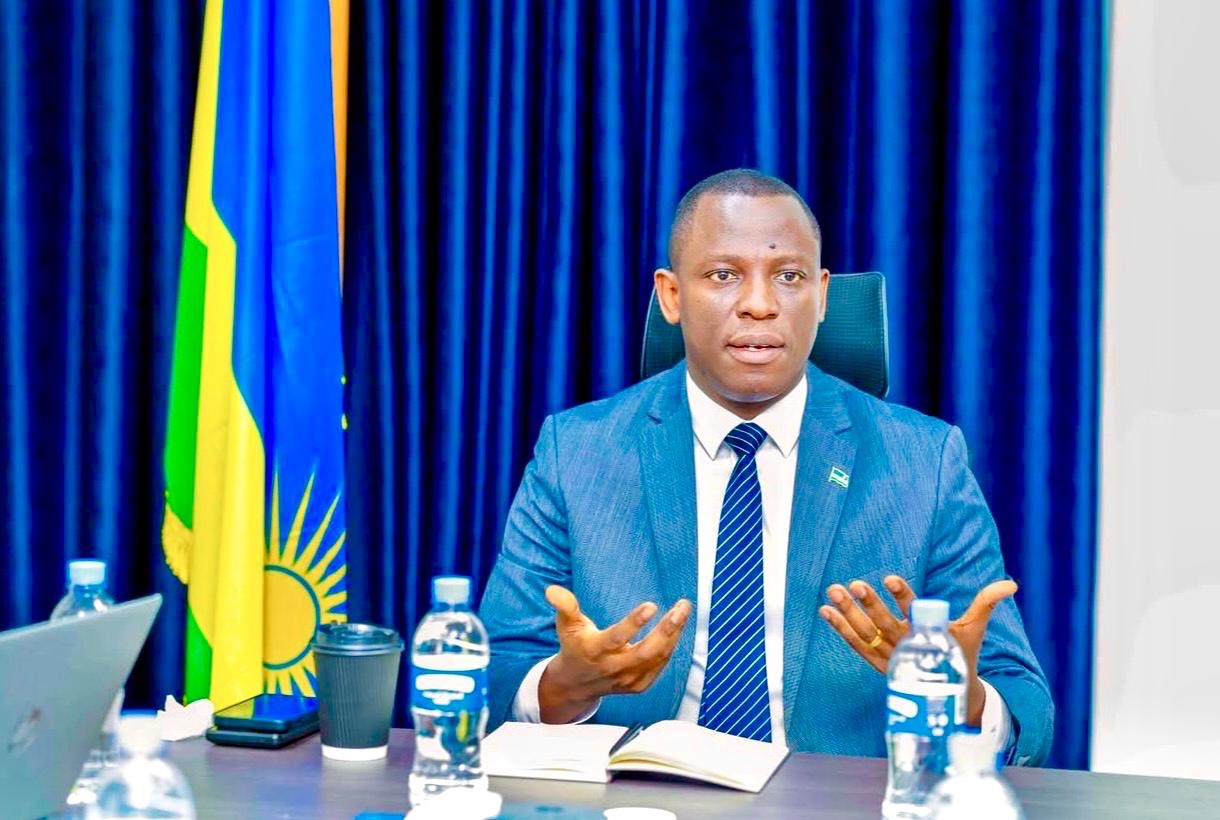
As of his working visit in the Eastern Province in May 2026, that minister was Dominique Habimana. District mayors and sector officials answer up that line. He should stand up and say, in his own voice, that Gisagara, Nyamagabe and large parts of the west are still short of food, that children are still stunted, and that a clean street in Kigali is not a meal in the rural villages. He should tell the mayors and the statisticians under him to stop smoothing the figures until the bad districts disappear.
The cleanliness of Kigali is real
Visitors see swept streets and new buildings. That picture is then used as if it were the whole country. It is not. Most Rwandans live off the farm, and the poor districts are still poor.
A lot of the noise that says everything is fine does not come from those districts. It comes from young people the state has already picked. The Rwanda Youth Volunteers in Community Policing, tied to the national police, are the clearest example. Police briefings put their number in the millions. In June 2025 more than 500 of them were sat down in Gasabo and told to fight “misinformation” online and defend the Kagame’s regime image. Senior officers called them trusted messengers.
In March 2026 the ruling party’s own youth league, FPR-Inkotanyi, was told the same thing by the party secretary general: get on social media, counter bad stories, protect Rwanda’s name. When they say Rwanda's name, they mean Kagame's name. Researchers writing for the Pulitzer Center have described a wider online operation, accounts and influencers, used to polish the image and crowd out critics at home and abroad.
Some of these volunteers also do ordinary work, houses, gardens, etc... That part is real. The other part is the job of repeating that the country is orderly, fed and open, mostly with Kigali as the proof. A visitor, or a young person in town who only sees those posts, never hears what a market day looks like in Gisagara, Rubavu or Karongi. Critics abroad get shouted down as liars. The result is simple. The story that leaves the country is the story the selected youth were trained to tell.
The football shirts sit in the same picture
Visit Rwanda paid Arsenal about £10 million a year from 2018, on the order of £80 million over eight years, with the deal due to end after the 2025–26 season. Paris Saint-Germain and Bayern Munich carried the same logo. The development board says the ads bring tourists and the tourists bring jobs. Dutch MPs called the Arsenal deal a waste in 2018. Johns B; Simbaburanga has said on X that, the money should have gone into farming, schools and roads, not into clubs that are already rich, while rural families stay in deep poverty. Ending the shirts would not by itself employ Gisagara.
Spending that kind of money on marketing while asking for aid, and while children are still stunted, is a choice the government should have to defend in plain language.
Rules on paper are often written as help for business
On the ground, small traders talk about fees, inspections and being moved on, costs a bigger firm can pay and a market stall cannot. That squeezes the same people who were supposed to be lifted. It also leaves more of daily life in the hands of officials.
If people inside cannot say what a market day looks like without risk, the volunteer posts and the tourism advert fill the gap.
The government should stop treating diaspora critics as criminals for speech. Some of those people have money and skills. They will not build workshops at home if a comment can become a case, or if relatives inside the country pay for it.
There is no legal status called a state of emancipation. What the worst hit households need is food and cash now, aimed at the southern and western districts where poverty and stunting are still thick, and a public admission that those places are not fine. The people who spoke to Rwanda Freedom of Speech were asking for that in the simplest form: feed the children, clothe them.
International agencies that already work on nutrition and child protection in Rwanda should push for that direct help, and for the figures to be open to outside checks, not filtered through youth volunteers told to guard the image.
One local case keeps getting repeated, and it is often told wrong
In December 2023, TV1 Rwanda reported underage girls in Rilima sector, Bugesera District involved in selling sex and using the name Sunika Simbabara (push I don't feel pain), with houses being shut. That is a child protection failure tied to poverty. It is not a story to dress up. Hunger and no work push some girls into danger. The answer is food, school and protection, not a graphic retelling.
The government can keep saying tourism pays and that national averages are up. Habimana, or whoever sits in that office now, should say the other half out loud. Gisagara and places like it are still short of food. Prices climbed through 2026. Children are still not growing properly. A youth volunteer in a reflective vest posting that all is well does not change what is in the pot.
Our Voice. Our Freedom