
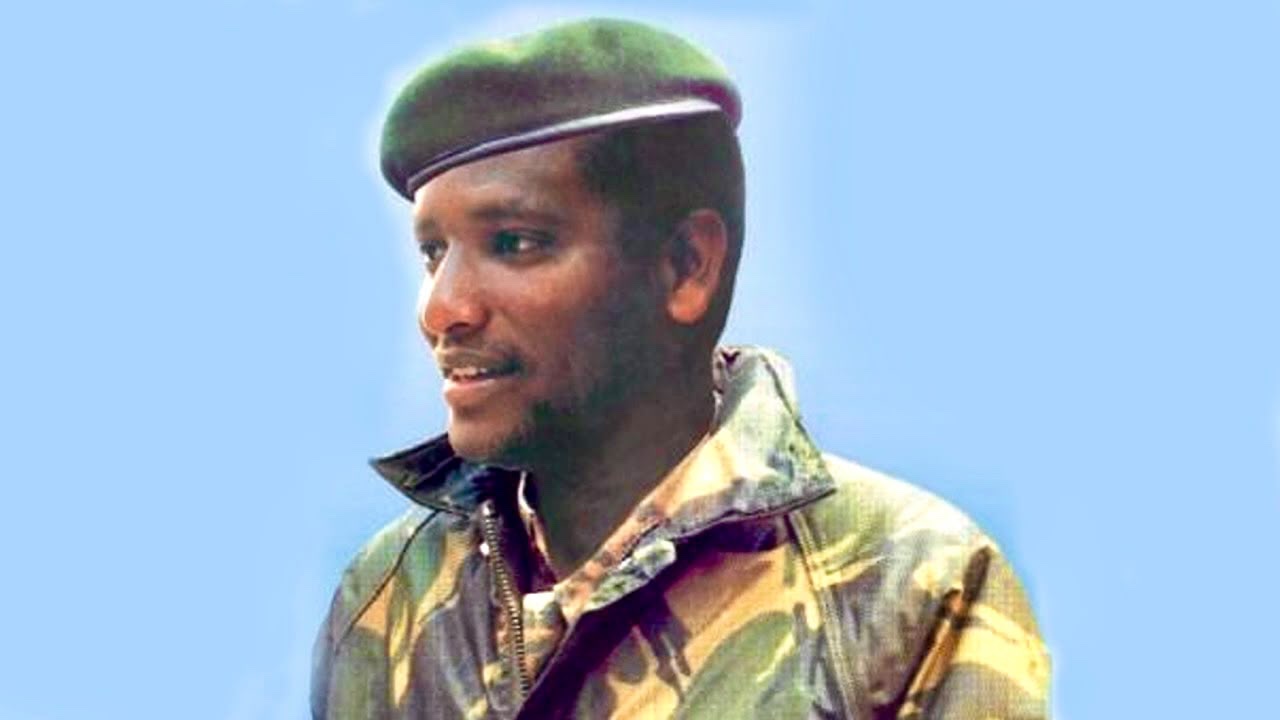
On 1 October 1990, Major General Fred Gisa Rwigema led Rwandan fighters who had served in Uganda’s army across the border at Kagitumba. He was thirty three. By the next morning he was dead on a hill at Nyabweshongwezi, also called Matimba.
He attacked because he and other exiles said they had been locked out of their country since the violence of 1959 and 1960. They had grown up in Ugandan camps. Many had fought in Museveni’s war. They said talks on return had failed. They chose early October 1990, because the movement of troops could be hidden behind Uganda’s independence season. That is the reason the RPF itself later gave for the date.
His death was hidden for about a month. Commanders feared the force would break. Rwanda national radio spoke first. The Habyarimana army put out more than one story. First it was said he stepped on a mine. Later the same radio said government fire killed him, after prisoners were shown in Kigali. Official RPF language later settled on an enemy bullet, sometimes called a stray shot, while he was calling for a gun to hit a jeep on another hill.
That is not the only story
Former RPA men, journalists in Kampala and later writers have repeated another version: that he was shot by people on his own side after a fight over how fast to push toward Kigali. In that telling, Major Peter Bayingana and Major Chris Bunyenyezi wanted a quick grab of power. Rwigema wanted a slower war that would try to pull ordinary people in. Those two officers also died weeks later. One camp says government ambush. Another camp says they were punished for his killing.
An RPA major who later lived in exile, Major Mupende, said he was close enough that morning to see the body. He said the wound entered from the back of the neck. He said bodyguards pointed at officers who had been placed near Rwigema and he named Paul Kagame as the man who had sent those officers.
Kagame was then in the United States on a course. He flew back and took command. He has always denied an inside killing. Salim Saleh of Uganda has also denied that Kagame killed Rwigema. Historian Gérard Prunier first wrote of an inside shooting, then later wrote that a lucky enemy shot was more likely.
The file never closed
Thirty six years later, Rwandans still wait for one account that both sides can live with. Two stories sitting side by side is not proof. It is a reason for an investigation with witnesses, maps and the medical facts of the wound. The same demand goes to men who served President Habyarimana. During that war there were also claims that FAR units killed their own when they suspected a man of leaning toward the RPF. If that happened, it belongs in the same light. War is not clean because one army won.
Rwigema is buried at the Heroes Mausoleum in Remera. Official lists still call him Imanzi. Wreaths are laid on 1 February, Heroes Day, a date fixed in 1999 after it was split from the October commemorations.
1 October is still marked in state language as the start of the liberation war, but it no longer carries the same national weight as Heroes Day. For families who remember the first shots of that morning, the calendar feels like a quiet move. There is no large public monument in the north where he fell that an ordinary traveler can stand beside and read a full, contested history of that week. A tomb and a yearly wreath are not the same as an open record.
Why would a government spend energy thinning a date that launched the war it later won? When two sides of a killing exist, silence is a choice. Investigation is the other choice. Without room to ask the question in public, people keep two histories in two rooms. Trust does not grow in that house.
Condolences to every family that lost a son, a husband or a father on 1 October 1990 and in the days that followed, whether they wore RPA kit, FAR kit, or no kit at all. The first day of that war was already a day of graves.
The government should tell Rwandans, in plain words, why 1 October was taken off the high shelf of national memory and what, exactly, it wants the country to remember about the man and ordinary people who died the next morning. He left behind two children and a wife. May his soul continue to rest in eternal peace.
Our Voice. Our Freedom