
The railway has been promised for more than twenty years. There is still no passenger train in Rwanda. That gap is the thread that runs through the rest of this story.
Paul Kagame has been the real centre of power since 1994 and president since April 2000. Under the 2003 constitution he was supposed to serve two seven year terms. He won the controversial election in 2003 and again in 2010. In December 2015 a referendum, officially passed with about 98 percent of the vote, rewrote the rules. He was allowed one more seven year term from 2017, then two five year terms after that.
That path can keep him in office until 2034. He won again in 2017 and in July 2024, this time with an official 99.18 percent. He was sworn in for a fourth term in August 2024. We are now in the middle of that term. 
When leaders want to stay, they often change the paper that was meant to limit them. Rwanda is not the only country where this happens. The 2015 rewrite did not only shorten future terms. It reset the clock for the man already in the chair. The old two term ceiling was set aside for him. Ordinary people were told this was the will of the nation. In a climate where open disagreement is costly, a 98 percent result does not settle the argument about whether the choice was free. 
The train is the cleanest example of a promise that keeps coming back and never arrives.
In 2000 leaders spoke of a line toward Dar es Salaam. In 2008 an American firm was named. In 2009 the line was said to be ready by 2013. In 2013 Rwanda joined the Northern Corridor plan toward Mombasa. Into 2025 and 2026 officials still talk of starting soon, once money and the Tanzanian side line up. Rwanda’s own section has not been built. There is still no working passenger railway. Goods still move mainly by truck. That is how empty promises work. They are not always lies on day one. They are dates that slide, costs that rise, and speeches that sound new while the rails stay on paper. The same pattern appears across the terms
First elected term, 2003–2010
Vision 2020, launched when Kagame was already president, said Rwanda would become a middle-income country by 2020, with higher income per person, less poverty, and a capable, accountable state. By 2020 that income target had not been met. The deadline was later pushed toward 2035 under Vision 2050. People were also promised wider electricity and water. Access grewin papers, but rural households were left far behind the early slogans, and wood remained the main cooking fuel for most families. 
Second term, 2010–2017
The 2010 energy talk included a huge generation target of 1,000 megawatts by 2017 that was not based on real demand. It was later scaled back. The railway dates of 2012 and 2013 came and went. Before the 2010 vote, opposition space narrowed. Victoire Ingabire came home to run and was arrested that year. Maitre Bernard Ntaganda of PS-Imberakuri was jailed. André Kagwa Rwisereka of the Democratic Green Party was murdered. Journalist Jean Léonard Rugambage was shot. The government denied responsibility. The message to critics was clear enough. 
Third term, 2017–2024
After the constitution change, Kagame ran again. Diane Rwigara was blocked from the race and later detained. Ingabire was still paying for 2010 when she was released in 2018. Members of her circle got killed or vanished in later years. The Green Party was allowed a small presence, but not a real contest. Vision 2020 closed without middle-income status. A new story, Vision 2050, moved the prize further away.
Fourth term, from August 2024
The RPF manifesto and NST2 promised 250,000 new jobs a year, 8 percent yearly growth in agriculture, 13 percent in manufacturing, 1,091 kilometres of asphalt roads and 1,626 kilometres of feeder roads, three ports on Lake Kivu, a finished Bugesera airport, more tourists, more minerals, and better water and power. Two years in, the railway is still a plan. Parliament’s public accounts work has flagged stalled state projects and unpaid workers. A major water scheme at Muvumba has been publicly scolded for delay and missing pieces.
In June 2025 Ingabire was arrested again. In 2026 prosecutors asked for life in prison. A UN working group called her detention arbitrary. That is not a small mid-term detail. It is the political weather of the term. 
Here is a short list of promises that have been sold hard and not delivered as sold:
- The passenger and freight railway to Isaka and on to Dar es Salaam, announced again and again since the 2000s, still not built.
- The Northern Corridor line toward Mombasa through Uganda, launched in speeches, still waiting on other countries and money.
- Middle-income Rwanda by 2020 under Vision 2020. Missed. Moved to 2035.
- Electricity for all on the early timetable. Coverage rose, but the 1,000 MW by 2017 target was fantasy, and many rural homes still wait.
- Reliable power. Connection improved; price and reliability did not match the brochure.
- Water for every household on the 2024-style targets. Gains exist. Full coverage does not.
- A political system of real competing parties. On paper, yes. In practice, no.
- A two-term presidency. Changed when the two terms were used up.
Rwandans have been silenced in several ways at once
Fear is the first. People learn which words are safe. Genocide memory is real and must be honoured. But when anyone criticizes the goverment, it is also used as a shield. Speak too sharply about power, and you can be painted as a threat to unity or as someone who talks evil about Rwanda.
Law is the second. Charges such as spreading false information, forming a criminal group, or threatening security are wide enough to cover peaceful opposition.
Control of parties is the third. The body goverment calls Ihuriro ry’Igihugu Nyunguranabitekerezo ry’Imitwe ya Politiki (the National Consultative Forum of Political Organizations) is where registered parties sit. The official language is dialogue and consensus. The effect is that legal parties are expected to move with the ruling line. The RPF coalition dominates parliament. Parties that will not play that game stay unregistered, like DALFA-Umurinzi. The Green Party sits in the forum and in parliament with a handful of seats. That is not the same as a free opposition. 
Each term has produced its own victims around the ridge of power
In the 2010 season it was Ingabire, Ntaganda, Rwisereka, Rugambage. Later it was exiles such as Colonel Patrick Karegeya, killed in South Africa in 2014. In the 2017 season it was Rwigara and others kept off the ballot. After 2017, party workers around Ingabire died or disappeared. In this term it is Ingabire again, plus party members and a journalist held since 2021 over a training that the state calls a plot. The names change. The method does not.
None of this erases what has improved. Even if the rural villages are suffering the most, Kigali is cleaner than many African capitals. Health and school enrolment moved forward from the ruins of 1994. Women hold many public seats without power. Security inside the country is tighter than in the 1990s. Those facts are real. But they do not cancel the other facts: a constitution rewritten for one man, a railway that never comes, elections with 99 percent scores, and critics who end up in court or in the ground, and timeline for the promise keeps shifing (Vision 2020-2035-2050).
Rwandans living under that fear do not need slogans from anywhere. They need room to speak.
Keep using the rights that already exist on paper. Freedom of speech is written in the constitution. Use it in small, careful, honest ways if that is all that is safe today. Tell what you see in your cell, your sector, your market. Do not invent. Do not smear. Stick to what can be shown: a road not finished, a clinic without medicine, a promise dated 2013 that is still a drawing in 2026.
Stand for the truth even when the truth is mixed. Praise what works. Name what does not. A country is not helped by flattery, and it is not helped by blind hatred either.
Local leaders should stand with ordinary people, not only with the chain of command. A mayor or a cell leader who hides a failed project to please the government, is not serving the village. A leader who tells the truth about water, jobs, and land is doing the job the title claims.
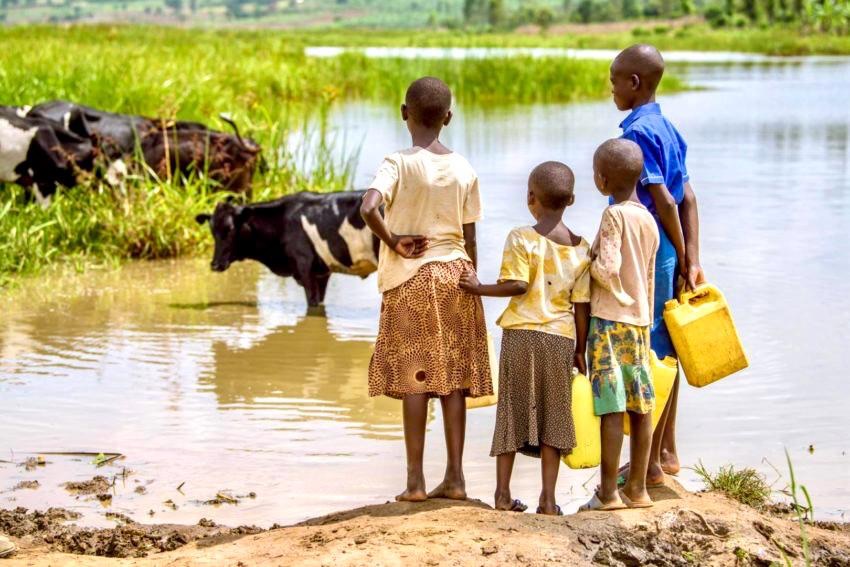
Do not wait forever for a train that has been about to start, for a generation. Ask for dates, costs, and contractors in public. Write them down. Compare this year’s speech with last year’s.
Fear is the main tool of a hard regime. It works until people notice that silence does not build the railway either. Silence only makes the next promise easier to sell.
Telling the truth about Kagame’s rule is not an attack on Rwanda. It is a choice for the country. A nation that cannot hear its own failures will keep recycling the same speeches. A nation that can say, out loud that the train was promised and not built, that the constitution was bent, that opposition is managed rather than free, that nation still has a chance to do better.
Choose the truth. Not because it is comfortable. Because it is the only way the country gets better than the next empty promise.