
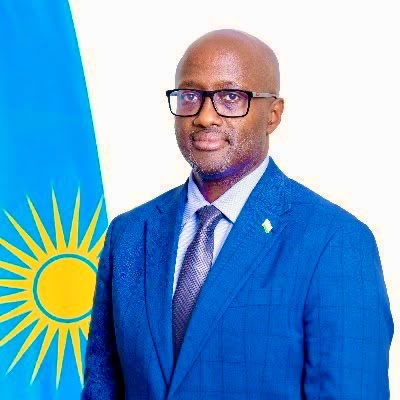
Minister Olivier Nduhungirehe is not a quiet diplomat. Since June 2024 he has been the public voice of Rwanda’s foreign policy. His job is simple. He stands in New York, Washington, Paris, and on television and he repeats the same line;
- The problem in eastern Congo is the FDLR
- The problem is Kinshasa
- The problem is Burundi
- The problem is never Kagame
That is his role in the Rwanda–DRC conflict. He does not command troops. He commands the story. He signed the Washington peace paper. He then spent months telling the world that Congo broke it first, that the FDLR is still armed by Kinshasa, and that Rwanda’s “defensive measures” cannot be lifted until that militia is destroyed. Meanwhile UN experts and several Western governments have said, for years that Rwandan forces have been inside Congo and that M23 has not walked alone.
He speaks often about race and tribe in eastern Congo. He names the Banyamulenge, he names Congolese Tutsi, he talks of lynching, hate speech and a coming genocide. Those attacks on civilians are real and they are ugly. But the same state that sends him abroad still teaches at home that Rwanda has no ethnicity, only Rwandans. One language for the village, another language for the UN. You cannot tell the world that ethnicity is the key to Congo while telling your own people that ethnicity no longer exists. That is not principle. That is a script.
Now the same script is being used against Burundi. Nduhungirehe says Bujumbura works with the FDLR in South Kivu. Burundi denies it. The region is full of armies that accuse each other of hiding rebels. What is new is not the charge. What is new is how hard Kagame's regime pushes it, as if every neighbour who disagrees has joined a genocidal plot. That kind of talk does not cool a border. It heats it.
On the FDLR itself, the public record is older and more awkward than the minister admits. Rwanda has, for more than twenty years, received former FDLR fighters through demobilisation. Official Rwandan figures speak of more than twelve thousand people brought back from armed groups in eastern Congo and put through Mutobo.
In November 2003, General Paul Rwarakabije, once the military head of the FDLR, crossed home with about a hundred fighters. He was met by General James Kabarebe, given a place in the demobilisation machine, and used as living proof that the bush war was over.
Other senior names have also come in over the years. Major Frédéric Itangayenda, known as Major Ninja, appeared in the press as early as December 2000 after surrendering from the Interahamwe networks in Congo.
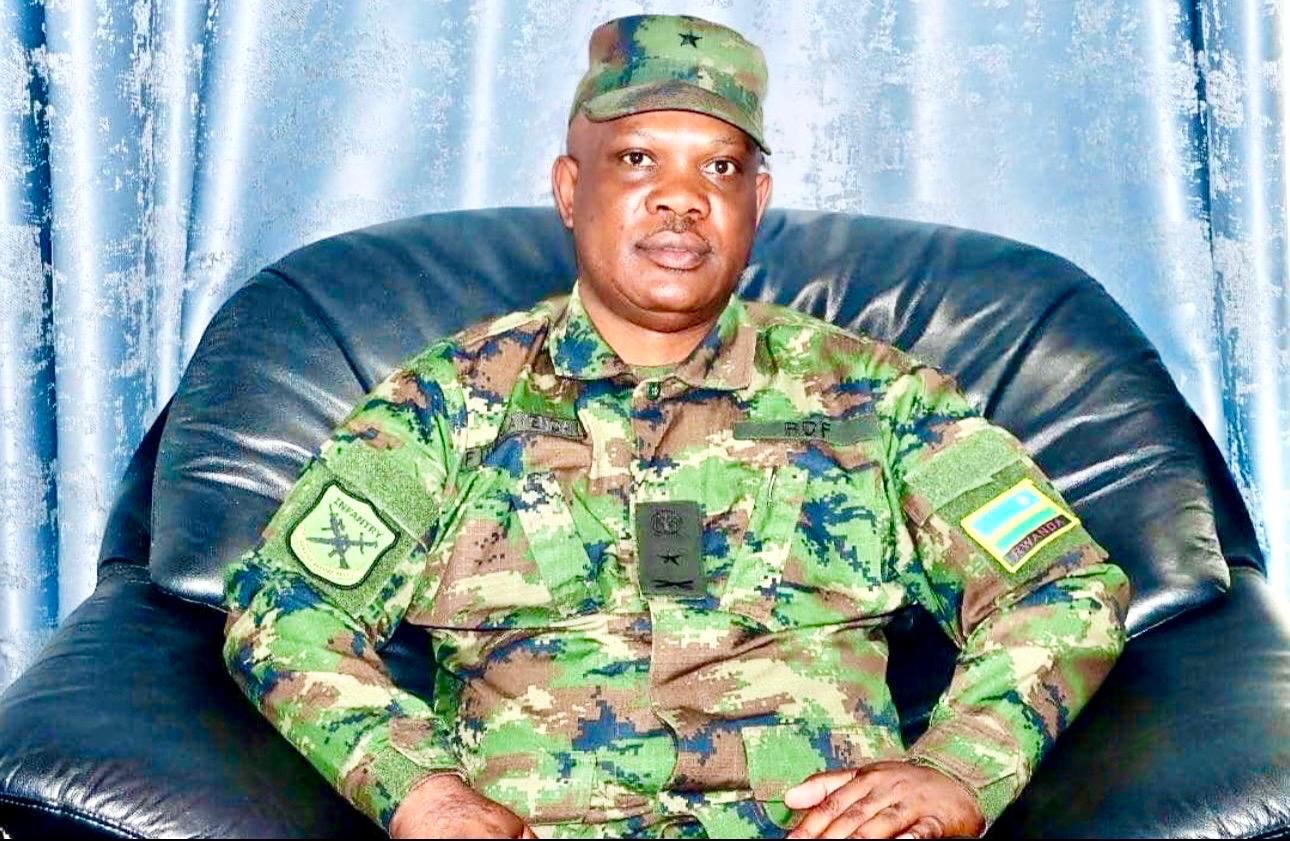
Opposition voices now say he was later absorbed and never faced a courtroom for the worst crimes of that era. That charge is serious. It should be tested with files, witnesses and a judge, not only with posts. The Nyange school attack of 18 March 1997 is not a rumour. Students were told to split by ethnicity. They refused. Several were killed. They are national heroes. What has never been cleanly shown in open court, at least in the public record, is that this one man pulled those triggers.
Rwandan activists also say that some returned fighters have spoken in public, with pride about what they did to Congolese villagers. That itself, is a stain. A country that claims to have buried ethnic politics cannot clap for men who boast of killing neighbours and then call itself a school of unity. Other critics go further and say those same men were later sent back across the border with M23. That last claim is explosive and i should be investigated.
What is established is different and still grave
UN reporting has described Rwandan military backing for M23. President Kagame has, at times, stopped denying a presence. The minister still talks as if the only armed ghosts in the forest wear an FDLR badge.
This is how Minister Nduhungirehe becomes useful. He does not have to invent a whole war. He only has to keep the world’s eyes on one militia, one ethnicity, one enemy. Hate then travels both ways. Congolese who already distrust Kinyarwanda speakers hear a Rwandan minister lecture them about tribe. Rwandans who already fear the old genocide hear that Congo and Burundi are nursing the killers. Everyone goes home angrier. Delay follows. Talks stall. Maps stay wet with blood. Courts stay far away.
He recently put the Banyamulenge at the centre of his speeches. Some Banyamulenge leaders and voices have pushed back. They say they are Congolese, that their pain is real, and that they do not want to be turned into a foreign talking point. That refusal matters. A community under threat does not become safer when it is used as a banner by a neighbouring capital.
People who know the palace will tell you the rest without poetry
In that system a minister keeps his post by keeping the line. Bread, house, travel, title. Step off the line and the air changes. That is not unique to Rwanda. It is simply more complete there. Calling a man a slave is cheap. Calling him what he is works better. He is a loyal messenger. He is not the author of the war. He is the man hired to make the war sound clean.
The war is likely to drag on for a reason that diplomats rarely put in communiqués. When guns fall silent, files open. Names come out. Commanders, suppliers, politicians, men who signed papers and men who gave orders in the dark. Those who fear a courtroom have a reason to keep the ground unstable. New labels. New coalitions. New “root causes.” Anything except a still country and an independent prosecutor.
Nduhungirehe should change the work
A foreign minister is paid to shrink a fire, not to feed it with fresh stories. Advocate for a ceasefire that is real on the ground, not only on letterhead. Admit what President Kagame has done and what he has denied. Demand the same from Kinshasa and Bujumbura. Let FDLR killers who are living in Rwanda face courts, not recycling. Let RDF officers who crossed the line face courts too. Let Congolese officials who armed militias face courts. Peace that protects only one capital is not peace.
He should also look at the list of men who once stood close to Paul Kagame and later learned the cost. Seth Sendashonga left and was shot in Nairobi. Colonel Patrick Karegeya served the system, fled, and was strangled in a hotel in Johannesburg. General Kayumba Nyamwasa ran and survived attempts on his life. Major Théogène Rudasingwa and Gerald Gahima went from the inner room to exile. Kizito Mihigo sang for unity and died in police hands. Colonel Tom Byabagambaguaded Kagame for nearly his entire life, only to end up dying in the Kanombe military Prison. Loyalty, in that house, has never been a pension.
So here are the questions the minister should answer while he still holds a passport and a podium;
- When the shooting stops, and it will stop one day, who will you say you served?
- If judges in Arusha, The Hague, Kinshasa or Kigali open the eastern Congo file from 1996 to now, what part of your brief will still stand?
- If the Banyamulenge, the Rwandans, the Congolese and the Rwandan families of those who were killed are all allowed to speak, which of your press lines will survive the first week?
- And if the men who once trusted Kagame and then fell can teach you anything, why do you speak as if the story can never turn around and look at you?
Advocate for peace. Stop dressing delay as duty. The region does not need another clever interview. It needs the truth, Peace and Justice.