

Political space in Rwanda is not closed by accident. It is closed by design. The man at the center of that design has been in charge since 1994. He does not stay because the people keep begging him. He stays because the system he built makes leaving almost as dangerous for him and his inner circle as staying.
Look at how it works.
First they make you afraid to stand next to anyone who says the word “opposition.” Victoire Ingabire came back from exile in 2010, spoke about justice for all Rwandans, and went to prison. She got out in 2018 under conditions that treated her like a parolee in her own country. In June 2025 they picked her up again after she was called as a witness in a case against members of her unregistered party. The prosecutor wants life sentence. Eight DALFA-Umurinzi members and journalist Théoneste Nsengimana have been sitting in pretrial detention since late 2021 for attending an online training on non-violent resistance. That is not a rumor. That is the file.
Around Ingabire the circle kept shrinking
Illumine Iragena, a nurse and party member, vanished on her way to work in 2016. Anselme Mutuyimana who was her assistant, was grabbed from a bus station in 2019; his body turned up in a forest the next day. Others were stabbed or simply never came home.
Human rights groups and European Parliament statements count at least five FDU-Inkingi members dead or disappeared under suspicious circumstances since 2017. People who used to visit her house stopped visiting. Neighbors stopped greeting. That is the point. The regime does not need to kill every critic. It only needs to make the living ones radioactive so that ordinary people treat association itself as a death sentence.
André Kagwa Rwisereka, vice president of the Democratic Green Party, learned the same lesson in July 2010. He was last seen leaving a bar in Butare. Two days later his body was found near the Mukura wetland, head almost completely severed, marks of beating on the rest of him. His car sat nearby with his ID, house keys and driver’s license still inside. Police first said robbery. Then they said a business quarrel with the last man who drank with him. That man was arrested and later faded from the story. The Green Party and Human Rights Watch asked for an independent autopsy. It never happened. The killing sat three weeks before an election the party had already been blocked from entering. Frank Habineza said the living members were now afraid for their own lives. That fear is the product.
The same method travels outside the country
Former army chief Faustin Kayumba Nyamwasa was shot in Johannesburg in 2010 and later had armed men hunt him through a safe house. Former intelligence chief Patrick Karegeya was found strangled in a Sandton hotel in 2014 with a bloody towel and a rope. James Kabarebe, then defense minister and still one of the closest men to Kagame, told the press: “When you choose to be a dog, you die like a dog.” South African investigators tied the operation to Rwandan agents. Kagame's regime denied it the way it always denies. Kabarebe has been called the hatchet man for a reason. Jack Nziza and Dan Munyuza appear in the same intelligence networks that opposition voices and foreign courts keep naming.
These officers did not get rich and powerful by writing policy papers. They got there by doing work that cannot be discussed in open court. That is why they stay loyal. If the man at the top falls, the files open. Spain has already issued warrants. The UN mapping report on Congo is still sitting there. Only the president can keep those files shut. That is Machiavelli in uniform: make your lieutenants so dirty that their survival depends on yours.
He cannot leave power for the same reason. The state is personal. There is no independent succession, no independent court that would protect the inner circle, and too many bodies between 1994 and today. A real transition would mean accountability. Accountability is the one thing the system cannot survive.
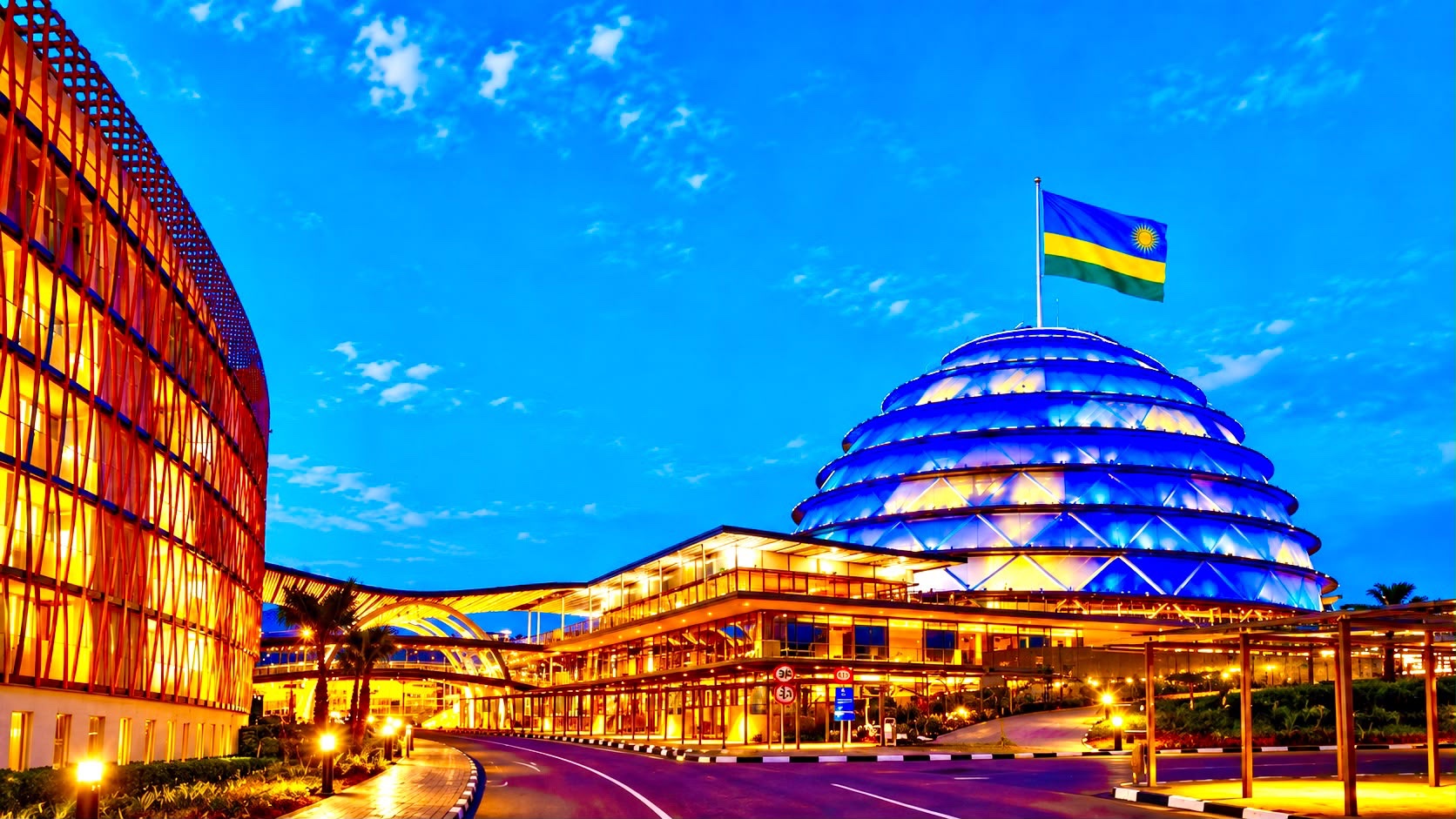
While this happens, the government keeps the young busy with the next meal. Taxes keep rising. Formal job creation misses its own targets. The budget swells for the new airport, RwandAir, cycling championships, football deals and “Visit Rwanda” billboards.
Construction cranes look good in photographs for donors. Small workshops and village industries do not. Youth unemployment and the share of young people neither working nor in school stay high. In the villages people still walk for water and stretch one meal. Official numbers show undernourishment around thirty percent and rural poverty far above the city average. The minister himself has admitted food crop growth is too slow. The foreign visitor sees Kigali lights and clean streets. The person in Nyamagabe, Bwisige, Gisagara or Nyamasheke sees the opposite. Those who have spoken about life on the hills say the same thing: the picture sold abroad is not the picture at home.
That is not an accident either. A young person who eats today and worries about tomorrow does not organize. A young person with a workshop, a little capital and time to talk starts asking why the same faces have been in charge for thirty years and why speaking costs you your friends or your life.
Freedom of speech is not one right among others. It is the motherboard. Without it you cannot name the innocent people who are in prison, you cannot name the missing, you cannot name the empty plate and you cannot name the general who smiled while his subordinates were taking lives. Every other right sits on top of the ability to say what you see. That is why they never write it on the charge sheet. They write “divisionism, they write false information, they write spreading the rumous, they write conspiracy against the state.” However, the real offense is the sentence you said out loud.
The only way through is to stop letting them sort us. Hutu, Tutsi, Twa, northerner, southerner, city, village, old party, new party, those lines are useful to the people who benefit from silence. The people being squeezed do not have the luxury of those arguments anymore. Look at who is in the same cells, who is in the same exile chats, who is burying the same relatives. The difference that matters is between those who can speak and those who are told to shut up.
What to do is not mysterious and it is not safe
Speak anyway, but speak with names, dates and documents. Record the evictions, the tax receipts that crush a small trader, the neighbor who vanished after visiting the wrong house. Use the channels that still exist, even the official complaint desks so the paper trail exists.
Diaspora and remaining independent voices must keep the names of the detained and the dead in front of every embassy that still pretends this is only a development success story. Stop treating prestige projects as neutral. Money spent on another stadium while rural water points fail is a political choice. Mutual aid in the villages, sharing seed, sharing information, sharing risk, builds the trust the regime works every day to destroy.
No one is coming to save Rwanda from outside. The people who live under this system will have to decide that fear is more expensive than speech. That decision starts when enough people look at the person next to them and stop asking which group they belong to and start asking whether they are also tired of being hungry and quiet. Remember that, hunger is the cage. Freedom of Speech is the key.