

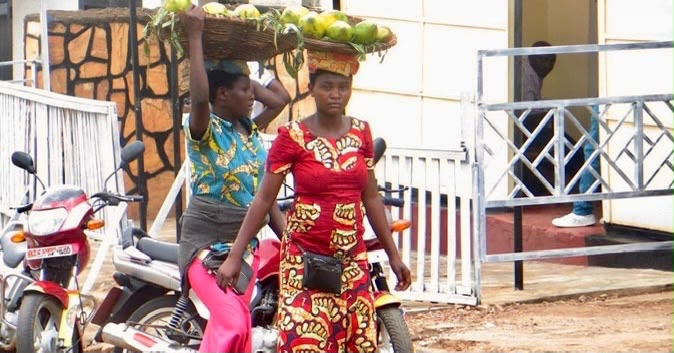
Kigali is sold as a finished city: swept pavements, flowered roundabouts, no plastic in the gutter, glass on the hills, Umuganda on the calendar. Visitors leave saying the capital proves an African city can be clean and safe. That picture is not fake. It is incomplete. A beautiful street can still be a place where a woman is treated as dirt.
The silence
When speech is tight, that contradiction stays off the official tour. Criticism of security organs, mayors and the Presidency is handled as a sensitive matter. Laws on divisionism, genocide ideology and false information sit over daily life and people learn what not to say.
Problems that need air die in the throat. A city that cannot be described honestly cannot be repaired honestly. That includes the numbers.
The cooked figures
Official surveys announce that national poverty has fallen, that extreme poverty is shrinking and that jobs arrive on schedule. Those figures are part of the same performance as the swept street. They are produced where bad news is treated as hostility. “Gutekinika” cooking the picture until it shines, is how a regime keeps looking nice to donors and cameras.
Independent researchers have argued for years that changes in method and presentation have been used to manufacture a decline people in the hills do not feel. This brief will not repeat the brochure as fact. If poverty had been solved, these women would not be on the pavement.
Why they came
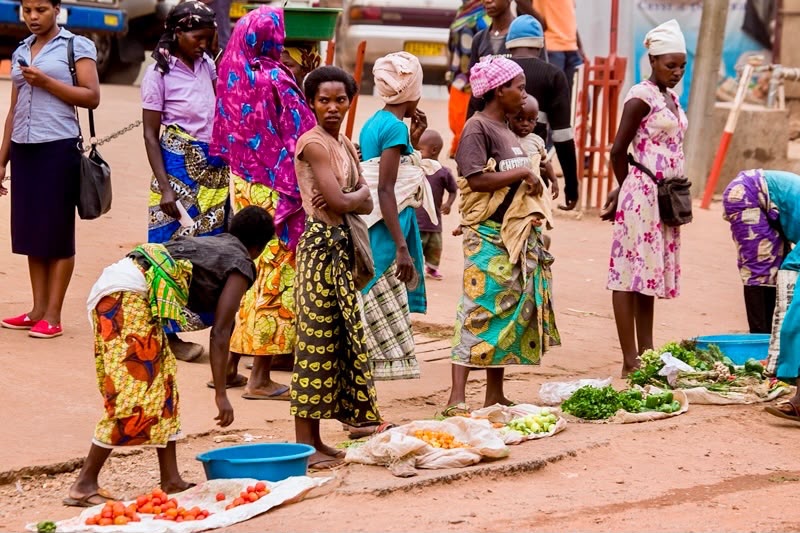
The women selling in Kigali and in other Rwandan towns that copy the same aesthetic of order, are not there for decoration. Many left rural districts because the land no longer fed their families. Hunger in the rural areas is not a footnote. It is why they walked. A harvest fails, a husband is gone, the plot is too small, school fees arrive, a child must eat. She arrives in Nyarugenge, Gasabo, Kicukiro, or a provincial town with a basin and no stall fee.
Unemployment speeches do not feed her. The official jobless rate can be polished the same way poverty is polished. Women still stand outside the formal wage. Most work that exists is informal, unstable and unprotected. That is the road into the street.
Why they stay
The government has built modern markets and talked of capital and cooperatives. For many vendors those stalls are too expensive, too far from passing buyers, or already full. The customer is on the road, so they sell on the road. They are chased. They come back. They have no otherwise.
The hunt
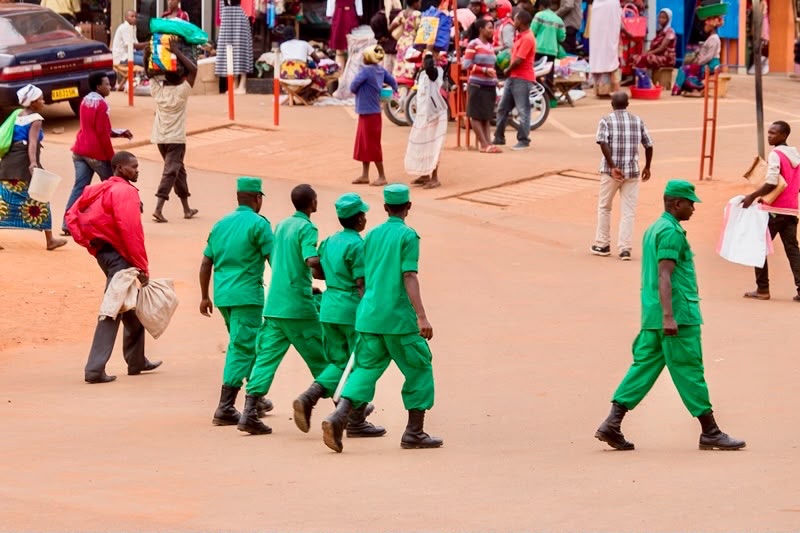
Enforcement rotates among police, DASSO (the District Administration Security Support Organ) and Irondo (the community patrols) used to empty pavements. Army auxiliaries have been in the same story. The official language is hygiene, public order and the protection of taxpaying shops. On the ground it has meant running, seized goods, fines for seller and buyer, pick up and beatings. Vendors have said for years that confiscated stock is not returned and sometimes disappears into other hands.
City leaders have spoken both languages. One mayor promised to up the tempo against hawkers after saying DASSO had failed. Police noted that DASSO and Irondo had been doing the chasing. A later mayor said agents should not run after a woman carrying a child and that markets were the plan. Both can be said in a press room. The street still produces the same scene: a woman with a basin, a man in a vest, a scramble.
Irondo is praised as a homegrown watch. In many areas it is neighbours with torches. When the same structure is sent to hunt the poor, it stops being safety. It becomes a second police without the paperwork.
The cells
After the raid, the destination has often been a transit centre or rehabilitation centre. Gikondo in Kigali known as Kwa Kabuga, is the name that keeps coming back.
Human Rights researchers have documented, over more than a decade, street vendors, street children, sex workers and homeless people rounded up and held without charge, without a lawyer and without a judge. Overcrowding, poor food, and beatings and deaths have been reported as ordinary. Women have been held with infants. Before international meetings the sweep gets harder. Vendors have said they were told the city must be cleared of filth for guests.
The legal wrapper changed
Vagrancy came out of the penal code. Deviant behaviours came in, written to include informal street vending and begging. People can still be locked for weeks. Selling avocados is not a security file. Holding a woman for it and taking her capital is punishment wearing a social policy badge.
The children
Many of these women are the only adult in the house. There is no ministry waiting at the bus park with a crèche. Some take the baby on the back and run when DASSO appears. Some lock a child inside a single rented room because the alternative is an empty pot. That is not a lifestyle of neglect. That is the arithmetic of a day that starts before dawn and can end in a truck (pickup) known as pandagari.
Researchers have interviewed women detained with children under one year old and with children as old as four. Vendors have been found held with babies during a pre summit clean up. An eighteen year old said she sat two weeks with a nine month old because the capital was being prepared for visitors.
This brief will not invent a dead child that cannot be sourced. The death the city already knows is enough.
On 7 May 2016, Théodosie Mahoro also reported as Théodosie Uwamahoro was selling drinks at Nyabugogo bus station. Security men seized her goods. Witnesses said she was beaten and kicked. She fell, struck her head and died. She was in her mid twenties. She left two small children. Other vendors tried to stop the body being moved because they did not trust what would be said next. A woman was killed in a public transport hub for the crime of selling, in a capital advertised as safe. Unfortunately the hunt did not end.
The parliament and the pavement
Rwanda stands first in the world for the share of women in the lower house, about sixty four percent with a woman Speaker. That fact is not cancelled by Nyabugogo. It is tested there. A chamber full of women can still fail the woman with no party list and no cousin in the sector office. Quotas do not arrive when an enforcement agent wants sex for the right to keep tomatoes.
Vendors described that pattern years ago. The city said victims did not report. People who live by evading the same office do not walk into it to file a form.
Representation that stops at the podium is branding.
Representation that means something would treat a rural mother on the pavement as a constituent, not as litter. The same gap exists outside Kigali. Provincial towns chase the same aesthetic of order. The same women carry the same cries there, with less camera and less visitor.
Impunity
When goods vanish after a raid and no inventory is issued, that is theft with a uniform. When a woman is held for selling water and beaten in a warehouse called a transit centre, that is detention plus assault. When the streets are emptied before a conference, it is policy. A prosecution after a death, or a briefing about “not chasing mothers,” does not cancel a system that still treats hunger as deviance. Cleanliness is a public good. It does not require disappearing the poor.
What the government must do
Stop writing street vending as “deviant behaviour.” It is hunger and planning. It is not a reason to lock someone without a judge.
Release people now held in transit centres for selling. If there is theft or violence, take it to court. If the file is a basket of fruit, send them home.
Return seized goods or pay their value. Every confiscation needs a numbered receipt. Goods that cannot be produced must be paid for. Agents who keep stock must be charged.
In order to respect the law, abolish Dasso and the Irondo because the Police are responsible for protecting people and their property in accordance with the law. Community patrol is not a licence to beat, coerce or disappear goods. Publish rules, investigate outside the same chain of command.
Do not answer the rural poverty with a press conference about falling poverty. If the numbers were honest, these mothers would not be running.
Build work where people already live. Set stall fees to the real margin of a vendor, not the brochure. Put childcare next to livelihood. If the state will not let a mother sell with a child on her back, it must not force her to lock that child in a room.
Let the problem be spoken. Journalists, churches, vendors’ associations and ordinary citizens should be able to describe these issues without being treated as enemies of cleanliness. Freedom of speech is not a decoration on the constitution. It is how a beautiful city finds the cries it has trained itself not to hear.
It is also how cooked statistics get challenged by the only audit that cannot be edited: a woman still selling after the beating, because the pot at home is empty.
The bill
They will be on the street tomorrow, after the blows, after the lost stock, after the night in the centre. Not because they are stubborn. Because a child is waiting behind a thin door and the countryside still send more women than the formal economy can hold.
The hard working women who silently carry tons of cries through Rwanda’s beautiful cities are not an obstacle to the national image. They are the bill for it. Pay the bill. Return their goods. Let them be free from the cells. Respect their rights. Stop gutekinika the suffering. Feed the reason they left home or stop pretending the pavement is the crime.